
 Back
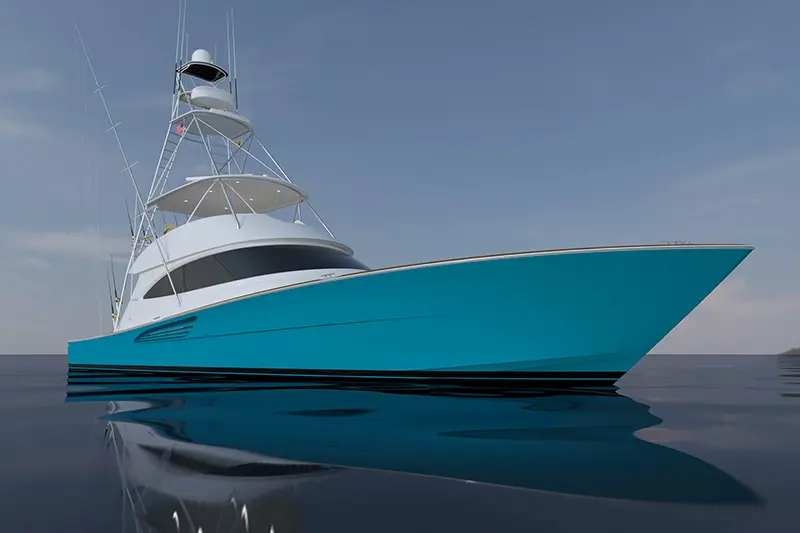
BackViking announced the second-generation 70 Convertible at the Palm Beach show this spring, and the boat has been the main topic of conversation on the dock since. The original 70 ran from 2010 to 2015 and earned a strong following. The Gen II is not a refresh of that hull. It is a clean-sheet build with a new bottom and updated layout options, which is a different thing entirely. For owners thinking about this size class, the redesign answers questions the original boat left open.
Why a Clean Sheet and Not a Refresh
When Viking comes back to a model after a decade, the easy path is to update the interior, freshen the electronics, and call it a new generation. That is not what happened here. The Gen II carries an entirely new hull, which means the ride, the running characteristics, and the efficiency numbers are all built from the ground up rather than carried forward.
The reason matters. Hull design moved forward meaningfully between 2015 and now. Everything Viking learned building the second-generation 58, the new 64, and the 90 fed into the new 70. The boat is the beneficiary of ten years of engineering progress, not a warmed-over version of a hull that was already good in its day.
The Four-Stateroom, Five-Head Layout
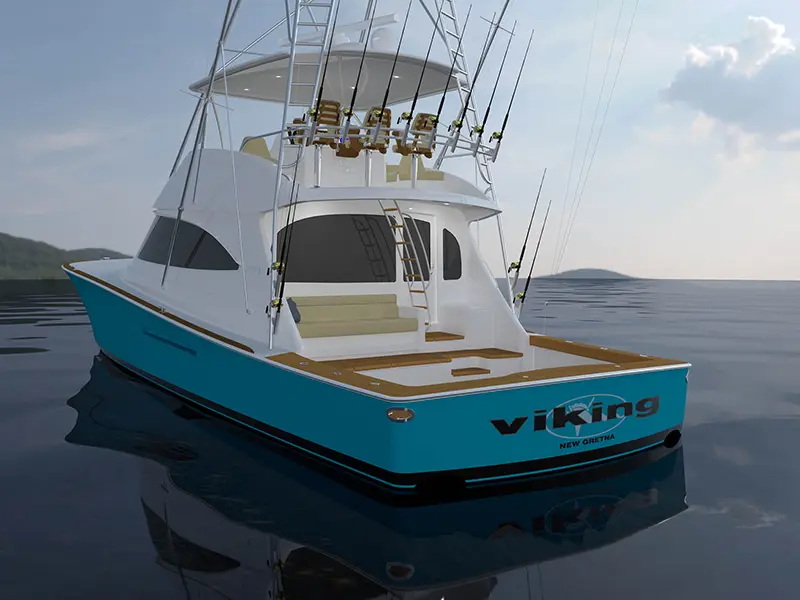
The Gen II is configured as a four-stateroom, five-head sportfishing yacht. That accommodation plan puts it squarely in the range where serious tournament teams and families both find what they need. Four staterooms means you can run a full crew on a multi-day tournament push or take the family south for the winter without anyone fighting for space.
For owners stepping up from a 64 or 68, the additional volume in the 70 is not just length on paper. The salon, the galley, and the cockpit all gain in a way that changes how the boat functions on a long canyon day and on a week-long tournament run.
Performance and Engine Options
The new 70 is expected to run in the low 40-knot range depending on engine selection and how the boat is configured. For a hull of this size, that is real performance. The boats that fish the canyons out of New Jersey need to make the run to the Hudson, the Spencer, and the Toms efficiently, and a 70 that cruises comfortably in the low 30s with that kind of top end covers the distance the way a serious offshore platform should.
Engine selection on a boat this size is a conversation worth having early. The right package for a tournament boat that runs hard is different than the right package for an owner who splits time between fishing and cruising. Our team walks through this with owners specing new builds, because the engine decision drives both the performance and the resale profile.
Where the 70 Sits in the Lineup
The Gen II fills the space between the 68 and the 80 in the convertible range. For owners who have outgrown the mid-60s but do not need or want the 80-plus footprint, the 70 is the boat that has been missing from the lineup for a decade. The Viking lineup now covers this range with a current hull, which it did not before the announcement.
We expect demand to run ahead of early production, which is the pattern on every significant Viking introduction. Owners who want a specific configuration and an early delivery slot are already having the conversation.
What It Means for the 68 and Earlier 70 Market
A new flagship in a size class does something predictable to the used market below it. The original 2010 to 2015 70 hulls become a known quantity against a new reference point, and the late-model 68 market tightens as buyers who want current-generation running characteristics weigh the new 70 against a used boat one size down.
For owners holding an earlier 70 or a late-model 68, this is worth understanding before any decision. The introduction of the Gen II changes the comparison set for everything in the range. If you are thinking about selling into this window, the list with us process starts with reading exactly how the new model affects your hull’s number.
Seeing One in Person
Photography does not carry a boat this size. The differences between the Gen II and the original 70 are things you understand standing in the cockpit and the engine room, not things you read off a spec sheet. As hulls come available for showings through the season, the in-stock and on-order page shows what is currently available.
For the full build details and current specifications, Viking Yachts publishes the documentation on the new 70 Gen II. The boat reads the way the spec sheet reads, which is how a clean-sheet Viking is supposed to work.
Ten years is a long time to leave a size class without a current hull. The Gen II closes that gap, and the timing lines up with a strong stretch in the offshore market.